
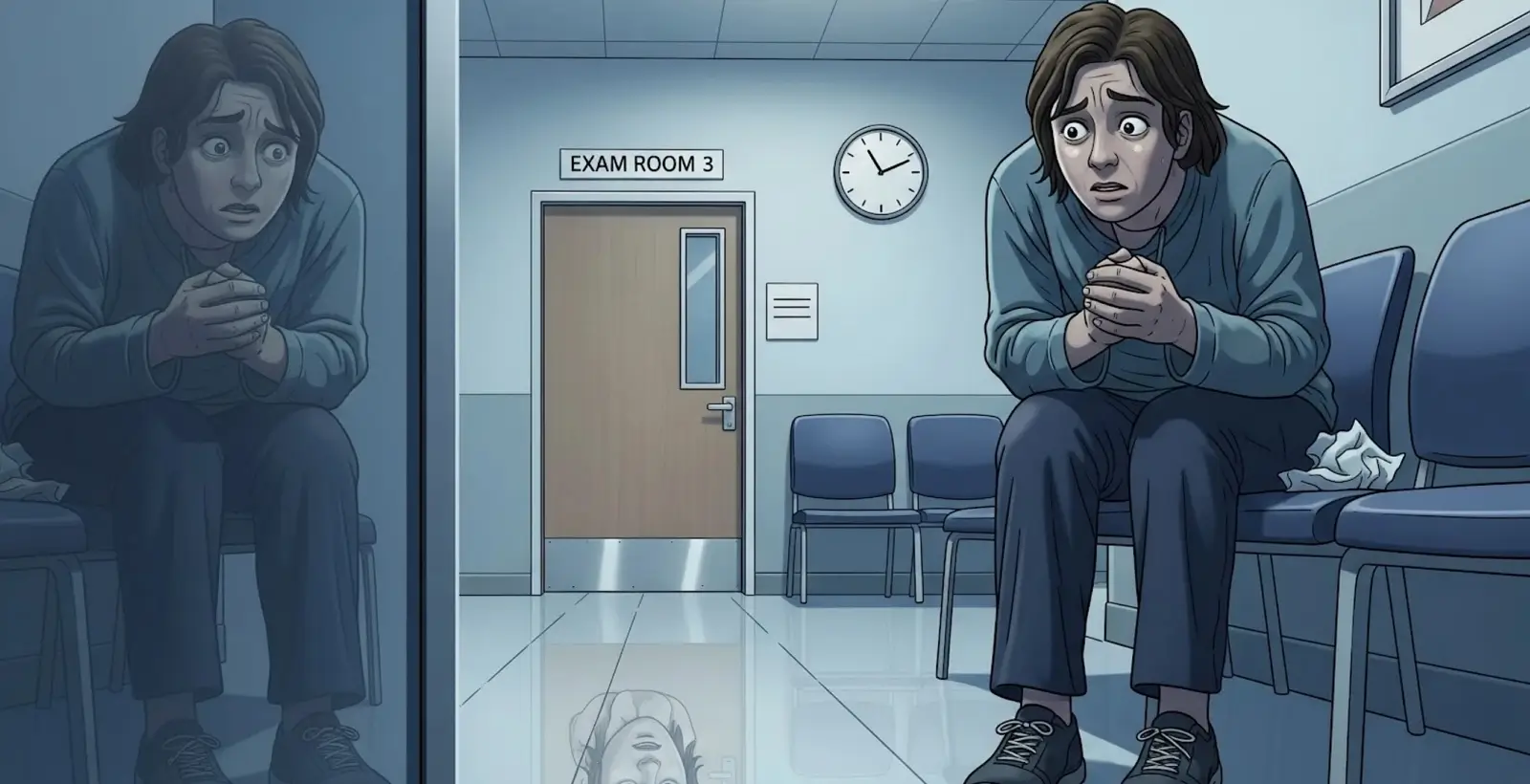
You are staring at the calendar. The date is circled in red ink, or maybe it is just burning a hole in your Google Calendar app. Your heart rate picks up a few beats per minute just thinking about the waiting room smell. That antiseptic, stale coffee mixture that screams “bad news.”
Stop it.
Most advice on this topic is garbage. People tell you to breathe deep or visualize a meadow. I have never seen a meadow fix a cortisol spike. If you are reading this, you don’t want a pat on the head. You want a strategy that actually gets you through the door without passing out.
We need to treat medical anxiety like a logistics problem rather than an emotional crisis.
Combat Anxiety with Information and Preparation
Anxiety thrives in the unknown. It feeds on the empty space where facts should be. The last time I went in for a weird skin check, I spent three days convincing myself I was dying. I wasn’t. I just had a patch of dry skin and an overactive imagination.
The fix isn’t positive thinking. It is aggressive preparation.
Write down exactly what you are afraid of. Is it the pain? The diagnosis? The cost? Or is it simply the feeling of losing control? Once you name the monster, it shrinks. I guarantee it.
Take cosmetic dentistry. It sounds low stakes, right? But I had a client recently who was terrified of getting composite veneers. She wanted them, she could afford them, but the idea of sitting in the chair for two hours with her mouth open paralyzed her. We looked at the procedure step-by-step. No needles involved in her specific case. Just shaping and bonding. Once she knew the mechanics, the fear turned into simple boredom. She brought headphones and listened to a podcast. Problem solved.
Stop Googling Symptoms to Reduce Health Anxiety
This is non-negotiable.
If you type “lower back pain” into a search bar, the internet will tell you that you have three days to live. The internet makes money on clicks, and terror drives clicks.
I know a guy who needed to see a Brisbane urologist. He was a tough guy who worked in construction. But he spent six hours on WebMD before his appointment. By the time he walked into the specialist’s office, he was convinced he needed major surgery. He was sweating bullets.
The urologist took one look at the scans, told him to drink more water, and sent him home with a prescription for nothing but hydration. All that panic was for nothing.
Google is not a doctor. It is a vending machine for worst-case scenarios. If you feel the urge to search for your symptoms, go for a walk instead. Leave the phone at home.
Dealing with White Coat Syndrome
You are not crazy. Your body physically reacts to the environment.
There is hard data on this. Studies show that up to 30% of people experience “white coat hypertension.” That means your blood pressure spikes purely because you are sitting in a medical setting. Doctors know this. They expect it.
I used to have this issue. My BP would hit 150/90 the second a nurse put the cuff on me. I started telling them upfront: “I hate being here, and my numbers are going to lie to you.”
Just saying it out loud broke the tension. The nurse laughed, we waited five minutes, and the second reading was normal.
Own your nervousness. Tell the doctor you are anxious. It doesn’t make you weak. It gives them critical data. A good doctor will slow down. They will explain things more clearly. If they roll their eyes, fire them. You are the customer. You can do that.
Why You Need a Medical Support Person

When you are scared, your brain shuts down the logic centers. You enter fight-or-flight mode. You literally cannot process complex information well.
I never go to a high-stakes appointment alone. I bring my sister along. She is annoying, but she takes excellent notes.
While I am busy hyperventilating internally about what a blood test might mean, she is writing down the dosage instructions and asking about side effects.
If you don’t have a sister, bring a friend. But pick the right one. Do not bring the friend who loves drama and gasps at everything. Bring the cold, analytical friend who balances their checkbook for fun. You need a second brain in the room because yours is currently offline.
Create a Post-Appointment Reward System
This is the most overlooked trick in the book.
Anxiety makes the appointment feel like the end of the world. Your brain cannot see past 2:00 PM on Tuesday. You need to force your brain to acknowledge that there is life after the appointment.
Schedule something for immediately after. Not “go back to work.” That is miserable.
Go to a movie. Buy a ridiculously expensive coffee. Meet someone for a drink.
The last time I had a scary MRI, I booked a table at my favorite steakhouse for two hours later. Every time the machine made that terrifying clanking noise, I thought about the ribeye. It sounds primal because it is. You are tricking your lizard brain into focusing on the reward, not the threat.
Take Control of Your Healthcare Journey
You are going to be anxious. That is fine. Accept it.
But do not let the anxiety drive the car. You get in the car. You drive to the office. You sit in the chair. You ask the hard questions.
Doctors work for you. You are paying them for a service. If you view the appointment as a business transaction rather than a judgment day, the power dynamic shifts. You are the CEO of your own health. Act like it.
Now, go check your calendar and make sure you haven’t cancelled that appointment yet.