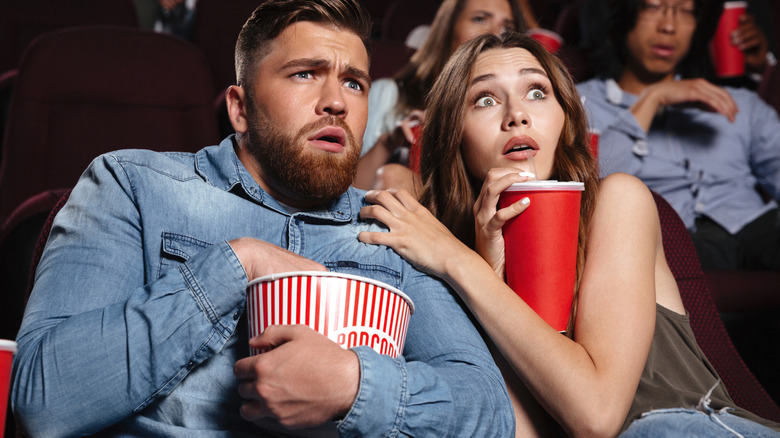
Audiences are divided when it comes to horror flicks — you either love them or you hate them. Indulging in an hour-and-a-half of blood, guts, gore, and jump scares may sound like the perfect Friday night for some, but others may go out of their way to avoid anything spooky, scary, or paranormal altogether.
When watching a scary movie, our body responds in the same way it would if faced with a real-life threat by switching into fight or flight mode, according to Everyday Health. This prompts the release of numerous chemicals, hormones, and neurotransmitters, including dopamine, endorphins, and adrenaline. Dopamine and endorphins stimulate pleasurable sensations, while adrenaline can cause “increased respiration, increased heart rate, [and] sweating,” sociologist and author of “Scream: Chilling Adventures in the Science of Fear” Dr. Margee Kerr told Everyday Health.
While some may enjoy these heightened physiological sensations, for others, it may induce feelings of anxiety. Clinical psychologist Dr. Chloe Carmichael explains via mindbodygreen that a like or dislike of the horror genre may be due in part to one’s tolerance of mental dissociation.
Horror lovers may find scary movies help relieve anxiety
As defined by Psychology Today, “Dissociating is the experience of detaching from reality.” Therefore, according to psychologist Dr. Chloe Carmichael via mindbodygreen, those who have an increased ability to suspend disbelief are more likely to enjoy a scary movie. On the flip side, however, those who have exceedingly heightened mental dissociation capabilities may find scary movies to be too mentally and physically overwhelming.
Additionally, if you’re diagnosed with anxiety and enjoy horror movies, it may actually be a sign of positive mental health coping. Therapist and author of “Hack Your Anxiety,” Alicia Clark, tells HuffPost that a large number of her patients are scary movie lovers. She explains that those who experience excessive worry and rumination may find watching scary movies to be an effective grounding technique that works by redirecting their attention. “Channeling everyday anxiety into something more focused and acute that’s about something and someone else, appears to offer some relief from what’s going on inside them,” Clark told HuffPost.
Conversely, if you’re someone who hates scary movies because you experience nightmares after the fact, experts say it may be a sign of repressed emotions (via Bustle).
A dislike of horror movies may indicate unprocessed emotions
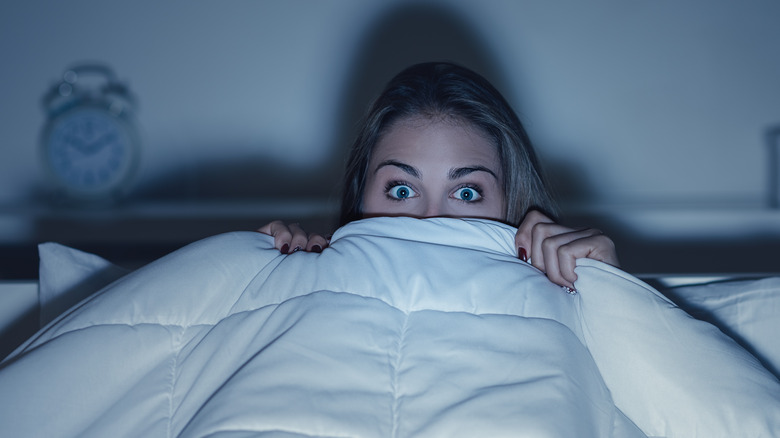
“Nightmares after horror films are our mind’s attempt to feel the full extent of the emotions that arose during the screening, specifically emotions that we didn’t allow ourselves to fully realize or feel at the time,” dream expert and author Pam Muller tells Bustle. To reduce the chances of nightmares, Muller suggests decompressing afterward by discussing your feelings with someone you trust. “Make a conscious effort to fully express negative emotions so that there’s less repressed energy of that negative feeling for your dreams to work with,” Muller adds. By doing away with the nightmares, you may find yourself beginning to like those October classics you once hated.
However, health experts stress that some people may dislike scary movies due to the fact that these films can potentially trigger personal trauma related to the subject matter (via HuffPost). In these cases, therapist Alicia Clark tells HuffPost that these individuals should never be pressured to view a scary movie that makes them uncomfortable.
If you or someone you know is struggling with mental health, please contact the Crisis Text Line by texting HOME to 741741, call the National Alliance on Mental Illness helpline at 1-800-950-NAMI (6264), or visit the National Institute of Mental Health website.