
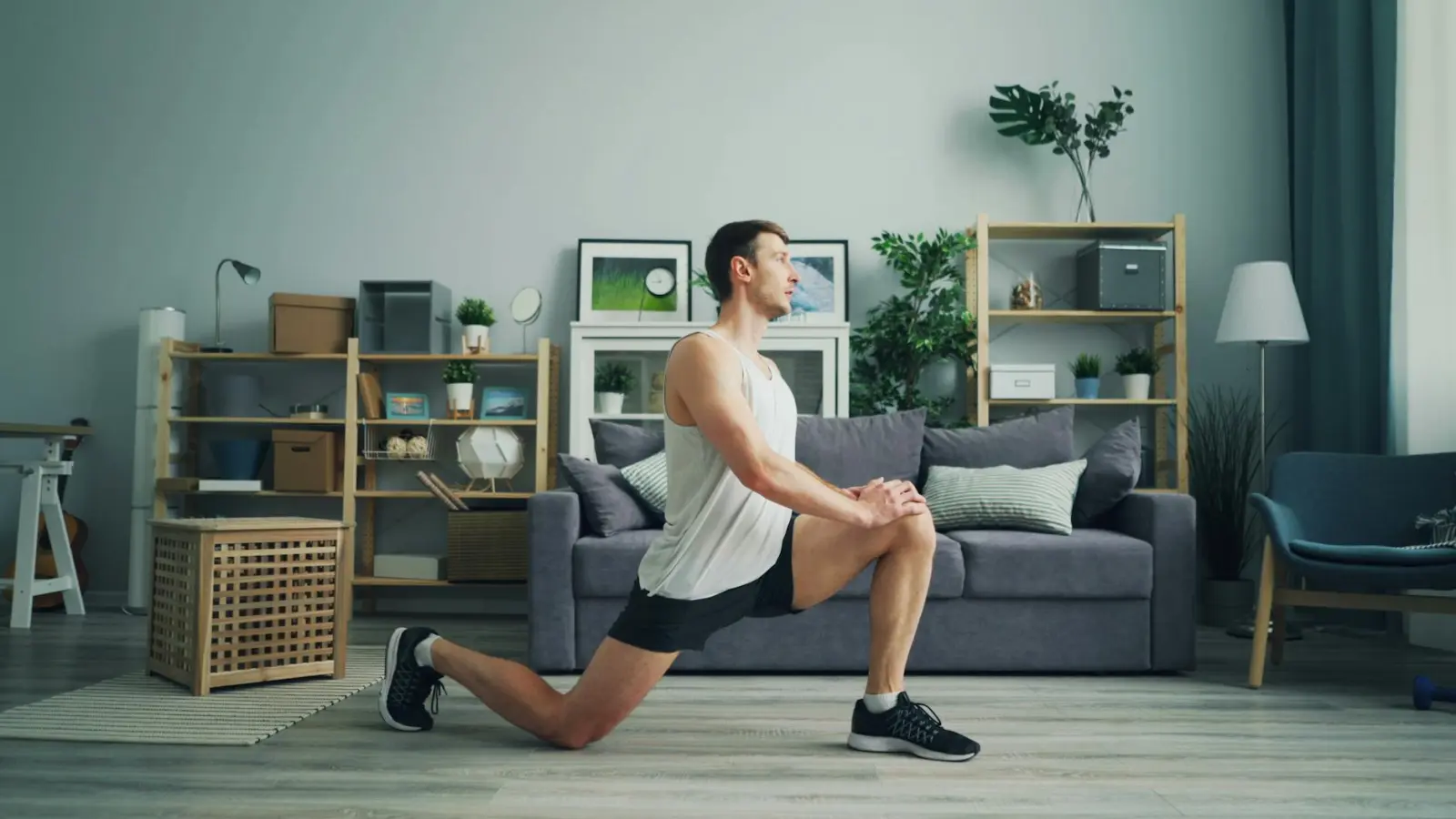
Three years ago, I stood in my lounge room at 6 a.m. with no gym membership, no dumbbells, and absolutely no idea what I was doing. My back had been giving me grief from sitting at a desk all day, I’d put on weight I didn’t recognise, and I was tired of making excuses. The thought of joining a gym felt overwhelming – the cost, the commute, the awkwardness of being surrounded by people who seemed to know what they were doing. So I did what most people do when they’re stuck: I searched YouTube for “home workouts” and hoped something would stick.
What I discovered over the next few months changed how I think about fitness entirely. I didn’t need fancy equipment or a home gym setup. I just needed to understand what my own body was capable of, and how to use it properly. Looking back now, I realise that some of my best training sessions have happened in the smallest spaces with literally nothing but gravity and intention.
Starting with what you already have
The first thing I learned was that my body is the equipment. Sounds obvious, right? But there’s something genuinely powerful about that realisation. When you’re not distracted by machines or weights, you actually have to focus on movement quality. I started with basic bodyweight exercises – push-ups, squats, lunges, planks – and I was shocked at how challenging they were when I actually paid attention to form.
Push-ups, in particular, humbled me. I thought I could do them, but after a few weeks of proper practice, I realised I’d been doing them wrong for years. My shoulders were doing most of the work, my core wasn’t engaged, and I was basically just going through the motions. Once I slowed down and focused on keeping my body in a straight line, feeling my chest and triceps working, everything changed. I couldn’t do as many, but the ones I could do actually meant something.
The beauty of bodyweight training is that it forces you to master movement patterns. You can’t just add more weight and ignore poor technique. Your body will tell you immediately if something’s wrong – usually through discomfort or an inability to complete the movement with control. This feedback loop became my teacher in a way that no personal trainer ever had.
Building a routine that actually fits your life
I’ve noticed that people often fail at home workouts not because the exercises don’t work, but because they try to replicate a gym routine in their lounge. That’s a recipe for boredom and burnout. Instead, I started thinking about what I could realistically do on a Tuesday morning before work, or on a Sunday when I had a bit more time.
My go-to sessions became simple: a 20-minute full-body workout three times a week, plus some lighter movement on other days. The full-body sessions would include a push exercise (push-ups or pike push-ups), a pull alternative (inverted rows using my kitchen table), a lower body movement (squats or lunges), and a core exercise (planks or dead bugs). Nothing complicated. Nothing that required me to rearrange furniture or clear a massive space.
What surprised me was how much consistency mattered more than intensity. I’d read somewhere that research suggests regular, moderate exercise is often more sustainable and effective long-term than sporadic intense sessions. That resonated with my experience. When I committed to three sessions a week, even if they were only 20 minutes, I saw real progress. When I tried to do intense workouts sporadically, I’d get sore, lose motivation, and stop for weeks.
Using your environment creatively
Once I got past the basics, I started noticing things around my house that could enhance my training. A sturdy chair became useful for step-ups and dips. My kitchen counter worked for inverted rows. A towel could be used for core work. I wasn’t being creative for the sake of it – I was just solving the problem of “how do I progress this movement without buying equipment?”
Progression is crucial, and this is where people often get stuck with home training. They think that without heavier weights, they can’t get stronger. But there are so many ways to make bodyweight exercises harder: slowing down the tempo, reducing rest periods, increasing reps, changing your leverage, or adding instability. I found that single-leg squats, archer push-ups, and decline push-ups gave me plenty of challenge without needing anything beyond my own body.
The other thing I discovered is that time and space constraints actually forced me to be more efficient. At the gym, I could spend 90 minutes doing various exercises, resting between sets, chatting. At home, I had to be intentional. This made me focus on compound movements – exercises that work multiple muscle groups at once – rather than isolation work. Squats, lunges, push-ups, and rows became my foundation because they deliver the most bang for buck.
Staying consistent when motivation fades
Here’s something nobody tells you about home workouts: they’re incredibly easy to skip. There’s no commute to the gym, no social pressure, no sunk cost of a membership. It’s just you and the couch. I’ve had weeks where I’ve done brilliantly and weeks where I’ve barely moved. The difference between those weeks isn’t willpower – it’s usually just whether I’ve set up a clear routine and removed friction.
I started scheduling my workouts like I’d schedule a meeting. Tuesday and Thursday mornings at 6 a.m., Sunday afternoon. I’d lay out a yoga mat the night before. I’d have my workout written down so I didn’t have to think about what to do – I just did it. Some mornings I genuinely didn’t feel like it, but the routine made it easier to just start. And almost every time, once I’d done the first few exercises, I was glad I’d shown up.
I also stopped expecting every session to be amazing. Some days I’d feel strong and could push hard. Other days I’d feel flat and just go through the movements with lower intensity. Both were fine. The consistency mattered more than the perfection of each individual session.
The unexpected benefits
What I didn’t anticipate was how much my relationship with my body would change. When you’re training at home, you’re not comparing yourself to anyone else. You’re not looking at what the person next to you is lifting or how they look. You’re just working with what you’ve got and noticing how it changes over time. That’s been genuinely freeing.
My back pain improved significantly. My energy levels became more stable. I slept better. I felt stronger in everyday life – carrying groceries, playing with my nieces, just moving around felt easier. These weren’t dramatic transformations, but they were real and they were sustainable because they came from a routine I actually enjoyed and could maintain.
After three years, I still don’t have a home gym. I’ve never bought a single dumbbell or resistance band. What I have is a practice I can do anywhere, anytime, with nothing but my body and a bit of space. That’s turned out to be far more valuable than any equipment ever could be.